Researcher · Engineer · Dublin
Saheed Faremi.
Researcher of the brain. Engineer of the systems people rely on.
01 · About
A researcher who ships.
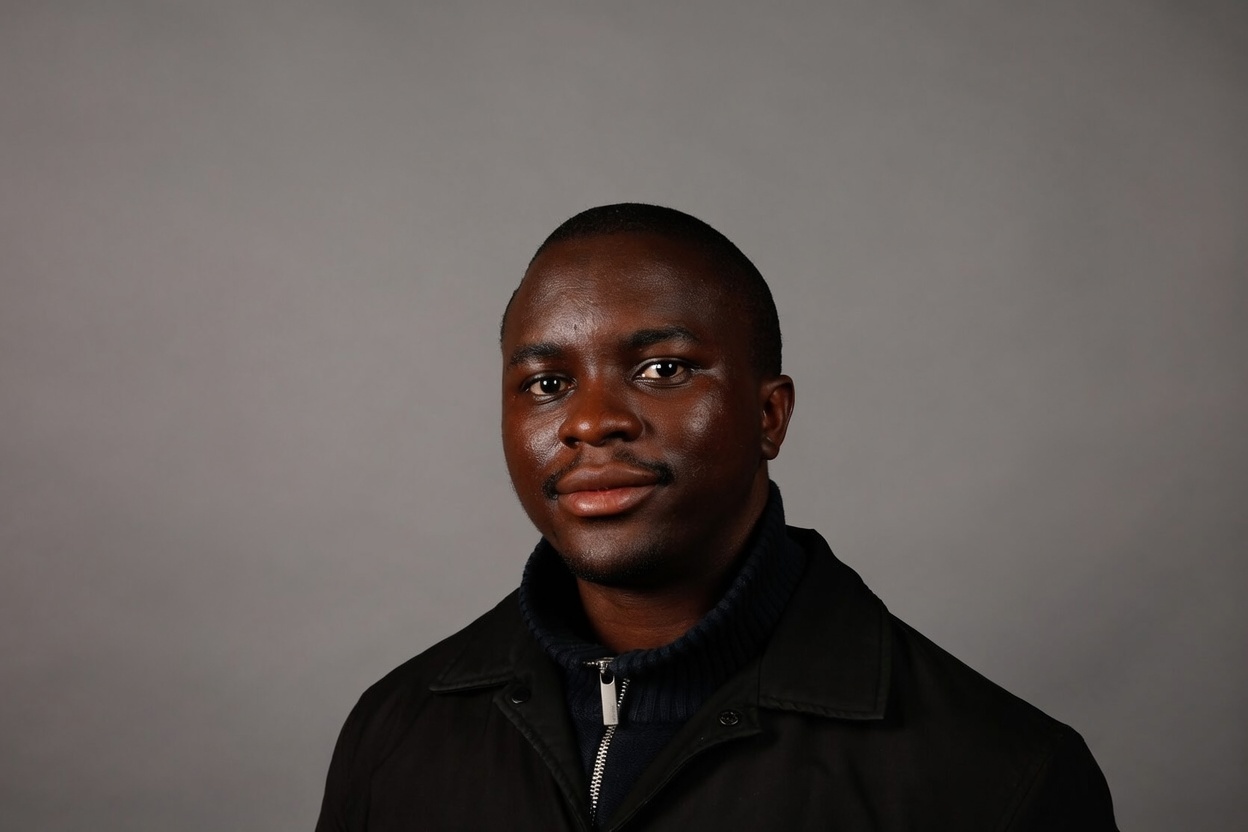
I work at the intersection of cognitive neuroscience and production engineering.
By day I build software people rely on: multi-asset fintech (Curnance), HR for African mid-market employers (Etihuku), healthcare data infrastructure (HIS Core, predict-dx), and learning systems (Skills Hub, Moodle). The through-line is that infrastructure for under-served users (geographically, economically, or computationally) needs the same engineering rigour as infrastructure for everyone else, and tends to need it more.
My doctoral research turns from the systems people use to the people themselves; specifically, what the brain looks like when it's running. EEG microstates are quasi-stable scalp topographies that segment continuous EEG into a discrete temporal alphabet. I'm working on whether deep generative models, variational autoencoders and Gaussian-mixture VAEs, can learn a microstate segmentation that's more stable across sessions and more behaviourally predictive than classical clustering.
In 2022 I represented Eswatini at the UNESCO India-Africa Hackathon at Gautam Buddha University in Uttar Pradesh. Team Geeks_on_Fire (five countries, five people) won problem statement AGRI12: an AI-assisted voice contact centre that lets farmers without smartphones report issues by phone and receive guidance back in their language. Gold medals and a ₹3 lakh team prize.
Based in Dublin, Ireland. Travel for research. open to collaboration
Infrastructure for under-served users needs the same engineering rigour as infrastructure for everyone else, and tends to need it more.
02 · Research
EEG microstates with deep generative models.
EEG microstates are quasi-stable scalp topographies, typically four to seven canonical classes, that segment continuous EEG signal into a discrete temporal alphabet. The classical approach uses modified k-means clustering over the global field power maxima. It works, but it depends on hard choices (the number of states, the reference electrode, the band-pass) and the resulting segmentation can be brittle across sessions.
This project asks whether a learned latent geometry, via a variational autoencoder, produces a microstate alphabet that is more interpretable, more stable across sessions, and more predictive of behaviour than the classical pipeline.
Approach
- VAE. Single Gaussian latent prior; learn a continuous embedding of topography frames; segment by latent-space clustering or by direct decoder reconstruction error.
- GMM-VAE. Gaussian-mixture latent prior with one component per microstate class, so the segmentation falls out of the latent prior structure rather than a post-hoc clustering step.
- Architecture search. Sweep over latent dim, regularisation, and decoder choices; compare reconstruction-vs-segmentation tradeoff curves across architectures.
diagram forthcoming
diagram forthcoming
diagram forthcoming
Diagrams export from ~/Documents/*.drawio as SVG and drop
into src/lib/assets/; pass via src.